Combined treatment of keratoconus - PTK, topography-guided ablation and cross linking.
Price 2.200 €Price on 10.09.2026.: 2.200 €The Athens Protocol is a combined procedure for treating keratoconus that brings together phototherapeutic keratectomy (PTK), topography-guided reshaping of the cornea (TGP) and corneal collagen cross-linking (CXL). The protocol was developed by Prof. Kanellopoulos in Athens, and Dr. Igor Knezović trained directly with him in 2012, in the field of keratoconus treatment.
The Athens Protocol is considered for patients with keratoconus whose corneal topography shows a pattern of changes suitable for this kind of topography-guided reshaping combined with collagen stabilisation. The choice between the Athens Protocol and other approaches, such as the DISC Protocol, depends on the shape and condition of your cornea, so the final recommendation is made individually, after detailed diagnostics.
Before the procedure, a detailed topographic analysis of the cornea is carried out, on the basis of which the reshaping of its surface is planned. All three phases of the protocol are performed in a single procedure, on an outpatient basis, followed by a healing period. Depending on the findings, regular check-ups are carried out during the year after the procedure to monitor the stability of the cornea and the effect of the protocol on your vision.
Unlike an approach that relies solely on a standardised reshaping pattern, the topography-guided principle of the Athens Protocol aims, in the doctor's judgement, to take into account the individual irregularities of your cornea. Depending on the findings, the planning of the procedure is thus adapted to the specific shape of each patient's cornea rather than to a predefined model. After the procedure, you are advised to follow the eye care instructions and attend all scheduled check-ups, so that the doctor can spot any deviations in the healing process in good time.
The procedure begins with initial smoothing of the corneal surface using a laser procedure, phototherapeutic keratectomy (PTK), which removes the corneal epithelium. The cornea then undergoes partial topography-guided ablation (TGP), which with great precision reduces micro-irregularities of the eye surface to the point that does not endanger patient safety. The excimer laser treats only a layer up to 50 micrometres thick in order to preserve the mechanical structure of the cornea, which is further strengthened by simultaneous application of corneal cross-linking (CXL).
Before the procedure, the outer part of the cornea (the epithelium) is usually removed, the so-called EPI OFF method, using alcohol (very rarely), a laser (Crete protocol) or the Pallikaris micro-brush. If the epithelium is not removed, this is the EPI ON method, which is used in special cases and in combination with other methods. For extra thin corneas, the Contact lens assisted CXL method is used: cross linking with a contact lens soaked in riboflavin, a special type of both lens and riboflavin, which makes it possible to perform the method on very thin corneas.
The Athens Protocol is performed in a single act - the procedure combines PTK, TGP and CXL at the same time, which, according to the description of the method, achieves a synergistic effect that these three procedures performed at different times do not. If TGP is performed simultaneously, that is, immediately before CXL, it allows deeper penetration of riboflavin and UVA rays into the cornea, resulting in greater modulation of collagen and increased corneal strength. By combining these procedures, according to the clinic's experience, post-operative recovery time is also reduced.
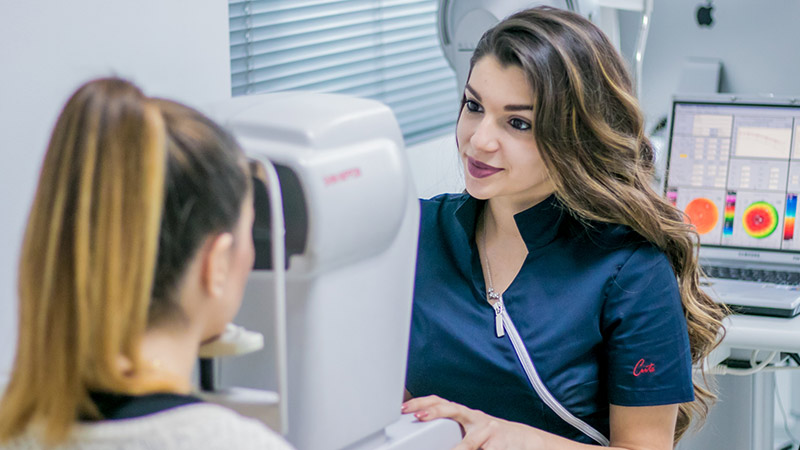
All steps of the procedure are carried out under the control of a topographer, a so-called Scheimpflug camera, which does not allow excessive ablation and tissue loss. The laser platform used for the Athens Protocol is also suitable for wavefront-optimised treatments of myopia up to -10, hyperopia up to +6 and astigmatism up to 5 dioptres. The Pentacam, or Oculyzer device, is a key diagnostic instrument for keratoconus, and the entire procedure is controlled by the Scheimpflug camera so that tissue remodelling stays strictly within permitted values.
During the procedure, corneal thickness is monitored and, where necessary, the instillation or irradiation protocol is adjusted according to individual deviations. Before the procedure, the UV lamp is regularly calibrated with a UV meter, and the radiation used to treat keratoconus must be strictly controlled and homogeneous, without so-called hot spots, as these can lead to side effects. Corneal cross linking, whether performed on its own or as part of the Athens Protocol, is not a universal procedure but an individualised one, tailored to each patient.
According to studies, after the Athens Protocol the cornea becomes 380% stronger, and disease progression is reduced by 97%. After the procedure, the cornea gains more regular contours, the dioptre is reduced, visual acuity improves, and adapting to contact lenses becomes easier if they are needed.
Unlike standalone cross linking, which only strengthens the cornea, after the Athens Protocol, according to the description of the method, the cornea achieves more regular contours, the dioptre is reduced and visual acuity improves, which also makes adapting to contact lenses easier if they need to be worn.
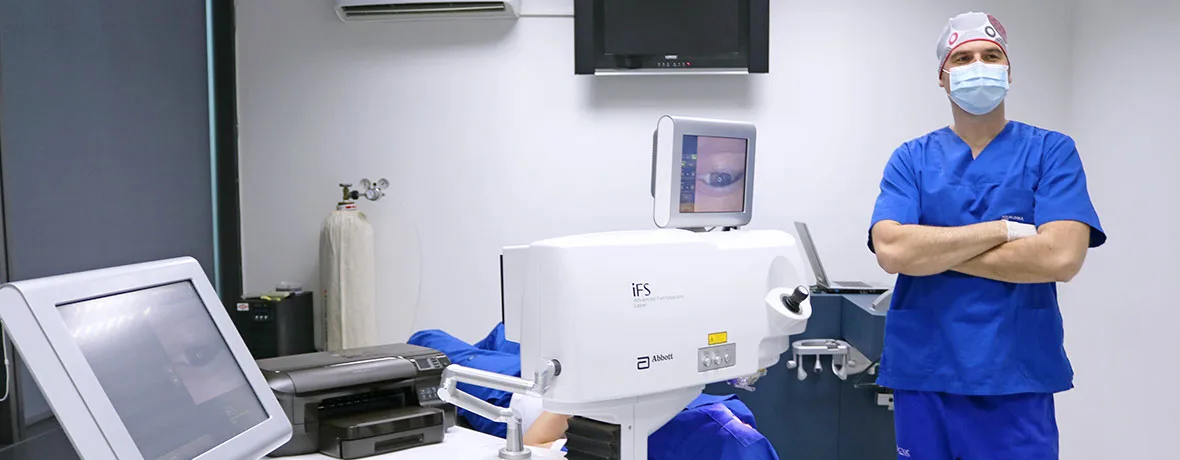
The entire procedure is painless, performed under local anaesthesia with drops, without an injection, and the complete procedure including patient preparation takes about 2 hours per eye. During the procedure the patient is awake and communicates with the surgeon, and immediately afterwards a therapeutic lens is placed on the eye, which protects it and helps the corneal surface heal faster and more evenly. After the procedure the patient receives the necessary therapy and goes home, where strict rest is advised until the first check-up, scheduled three days later.
Three days after the procedure, patients can usually already function normally, but if you work in unfavourable microclimate conditions (wind, dust, smoky rooms), it is advisable to stay at home for the next 7-10 days. Because of the strengthening of the collagen, the cornea may change over the following year until it reaches its final shape. If necessary, contact lenses can be prescribed after 1-2 months for better visual acuity.
It is not advisable to operate on both eyes on the same day. As a rule, the procedure is first performed on the eye with more advanced disease progression, and once it has recovered, the other eye follows, most often 1-2 weeks later, depending on urgency and the doctor's assessment.
The Athens Protocol costs 2.200 €, and, according to the service description, this price includes check-ups and diagnostics for a year after the procedure. Before the protocol, a keratoconus examination costing 150 € is required. A full overview of prices is available on the Price list page, and the doctor suggests the choice of protocol after diagnostic assessment of your cornea.
If you have been diagnosed with keratoconus and would like to know whether the Athens Protocol is a suitable approach in your case, book an appointment for an examination, and for further questions contact us through the Ask the doctor page.
| Service | Booking | Price |
|---|---|---|
| Examination for keratoconus | e-Booking | 150 €Price on 10.09.2026.: 150 € |
| Corneal cross-linking (CXL) epi-off | 1.000 €Price on 10.09.2026.: 1.000 € | |
| Corneal cross-linking (CXL) epi-on | 1.000 €Price on 10.09.2026.: 1.000 € | |
| DISC ProtocolPTK + DISC Ablation + CXL | 2.700 €Price on 10.09.2026.: 2.700 € | |
| Athens ProtocolPTK + TGP + CXL | 2.200 €Price on 10.09.2026.: 2.200 € | |
| Post-operative check-up | On request |
The prices include follow-up examinations and all diagnostic tests for a period of one year
The regular price is crossed out and the price valid today is highlighted. Next to each item, the price that applied on 10.09.2026. is also shown (Decision on displaying an additional price, NN 101/2026).
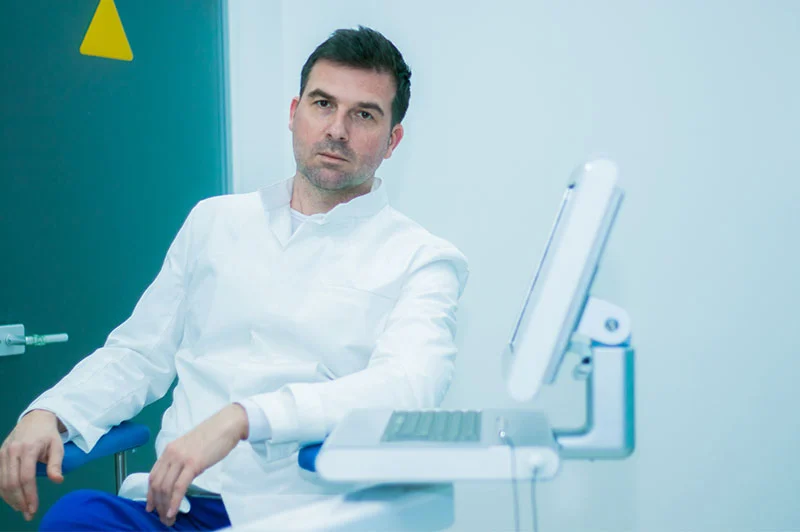
Specialist in ophthalmology, founder of Poliklinika Knezović
Expert in diseases of the anterior segment of the eye and in laser treatment of keratoconus. More than 25 years in ophthalmology, with training at leading centres around the world.
Answers to the questions patients most often ask about the Athens Protocol.
Every eye is different. The doctor decides on the method only after an examination and diagnostics. Book an appointment and you will receive a clear recommendation and an exact quote, with no obligation.