
To keep functioning, the eye is moistened by tears. Blinking provides constant lubrication, so the front surface of the eye is always moist. It is normal for excess tears to drain through small ducts into the nose. Sometimes ...
Pre-procedure examination 100 €Price as of 10.09.2026.: 100 €To keep functioning, the eye is moistened by tears. Blinking provides constant lubrication, so the front surface of the eye is always moist. It is normal for excess tears to drain through small ducts into the nose. Sometimes there are so many tears that the system cannot drain such a large amount, and excessive watering results.
AGE
Closed, that is blocked, tear ducts are most common in babies or later, in adults over 50 years of age.
By lacrimal duct surgery we mean:
Patients whose tears do not drain properly often develop secondary infections and purulent discharge in the inner corner of the eye. After local anaesthesia, the lacrimal ducts are probed to ensure they are open and so reduce how often infection occurs. The procedure sometimes has to be repeated several times.
Punctal plugs are specially designed small plugs that are implanted into the drainage tear ducts in order to reduce the outflow of natural tears. They can be placed in the lower eyelids and, in more severe cases, in the upper ones as well. They are used in severe forms of dry eye.
When it is performed
Probing of the lacrimal ducts is performed when tears cannot drain normally, leaving the eyes watery and irritated. The cause is often an infection, inflammation, tumour or injury.
The course of the procedure
The procedure is performed by widening the lacrimal canaliculi or by puncturing the membrane located in the middle of the drainage part of the tear system, which prevents tears from draining normally from the eye into the nose.
Anaesthesia
The procedure is performed under local anaesthesia with drops.
Before probing
Before probing, a specialist examination is needed, an informed consent form must be signed, and anaesthetic drops are put into the eyes.
During probing
During probing the patient sits comfortably in the operating chair. The procedure takes only 5-10 minutes per eye.
After probing
Recovery after probing of the lacrimal ducts is quick. The patient goes home after half an hour. The check-up is the next day. After the procedure the patient receives the appropriate treatment and instructions. After the procedure it is recommended not to rub or press the area (do not splash it with water, do not wipe it with a towel, do not do heavy physical work).
When they are used – also a risk factor
Punctal plugs are used in the hyposecretory form of dry eye of various aetiologies, such as:
Before implantation
No special preparation is needed before the procedure. The procedure is not painful, but anaesthetic drops are put into the patient's eyes to make it as comfortable as possible.
The course of implantation
During the procedure the patient lies down. The punctal plugs are placed precisely under an operating microscope. The procedure takes only a couple of minutes per eye.
After implantation
After implantation the patient goes home. It is recommended that in future the patient does not rub the eyes hard where the plug has been placed.
The implantation procedure takes 5 minutes, in the operating theatre. The patient lies down and the implantation is done under an operating microscope. Anaesthesia is usually not needed, or it is given in the form of eye drops to make the procedure even more comfortable.
Punctal plugs differ in the type of material they are made from, their size and how long they last.
This is a minimally invasive procedure. Before the procedure, a detailed consultation with a specialist doctor is needed.
By placement site, implants can be divided into:
Punctal plugs are positioned superficially. Their advantage is that they are easy to remove, but more care is also needed when washing the face and handling the eyelids so that the implant is not removed by accident. Even if that does happen, it is not dangerous and the procedure is easily repeated. Intracanalicular plugs are positioned deeper in the tear canals.
By type of material, punctal implants are divided into temporary ones - collagen plugs that are resorbed after a certain time and need to be replaced, permanent silicone ones, and advanced ones (SmartPlug, Oasis FormFit, Eagle “Flow Controller”). These change shape and volume depending on external conditions (temperature, humidity). The size of the implant varies from 0,2 - 1,0 mm, and precise measurement is needed so that the right size can be chosen individually.
The current price is shown in the box with the price at the top of the page. For all current prices, see the valid price list of our clinic.
Items from the clinic's price list for this service. The final price depends on the findings and the doctor's assessment.
Full price list| Service | Booking | Price |
|---|---|---|
| Examination for an oculoplastic procedure | e-Booking | 100 €Price on 10.09.2026.: 100 € |
| Probing of the lacrimal glands | 40 €Price on 10.09.2026.: 40 € | |
| Syringing of the tear ducts | 20 €Price on 10.09.2026.: 20 € | |
| Syringing of the tear ducts with dexamethasone/fluoroquinolone | 55 €Price on 10.09.2026.: 55 € |
The regular price is crossed out and the price valid today is highlighted. Next to each item, the price that applied on 10.09.2026. is also shown (Decision on displaying an additional price, NN 101/2026).
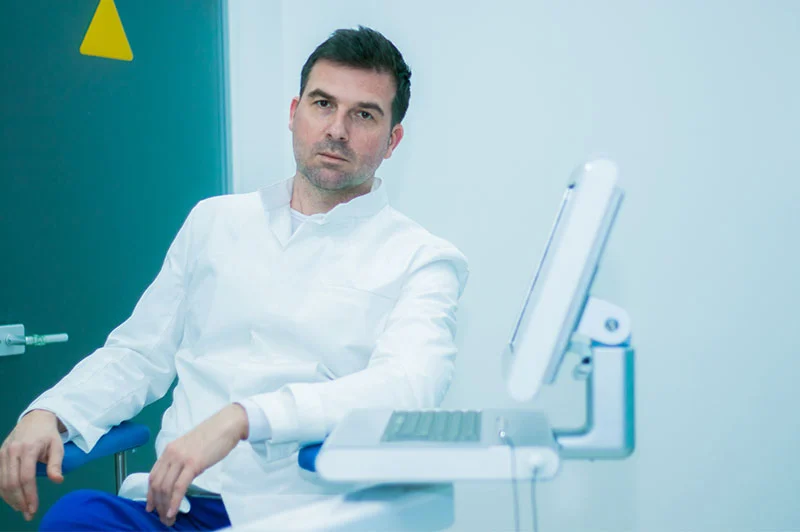
Specialist in ophthalmology, founder of Poliklinika Knezović
Expert in diseases of the anterior segment of the eye and in laser treatment of keratoconus. More than 25 years in ophthalmology, with training at leading centres around the world.
Every eye is different. The doctor decides on the method only after an examination and diagnostics. Book an appointment and you will receive a clear recommendation and an exact quote, with no obligation.