Nowadays more and more people are short-sighted, long-sighted or have astigmatism and want to solve their vision problem with contact lenses. Whether...
Lens fitting from 70 €Price as of 10.09.2026: 70 €Nowadays more and more people are short-sighted, long-sighted or have astigmatism and want to solve their vision problem with contact lenses. Whether you play sports or want them for aesthetic reasons, contact lenses are a very good choice for your eyes. You need to have a contact lens examination, at which the type of lens wear is agreed depending on your needs, the structure of your eye and your prescription.
With proper care and handling, contact lenses do not have to be harmful to the eye. With advances in lens manufacturing, today there are lenses on the market made of different materials, designed for all-day wear and with different replacement schedules, so a type of lens that suits your personal needs can really be found. It is necessary to follow the manufacturer's instructions on hygiene.
Lenses affect the tear film if they are used incorrectly. With advances in lens manufacturing, there are now lenses on the market that are permeable, allowing oxygen and other substances to pass through them, so the effect on the tear film is minimal. However, an examination by an ophthalmologist also assesses the tear film and, if necessary, artificial tears made specially for contact lens wearers are introduced.
Proper hygiene is important for preventing eye infections, as is wearing contact lenses correctly according to the manufacturer's instructions. If you notice any signs of inflammation (redness, itching, swelling), you should see an ophthalmologist immediately.
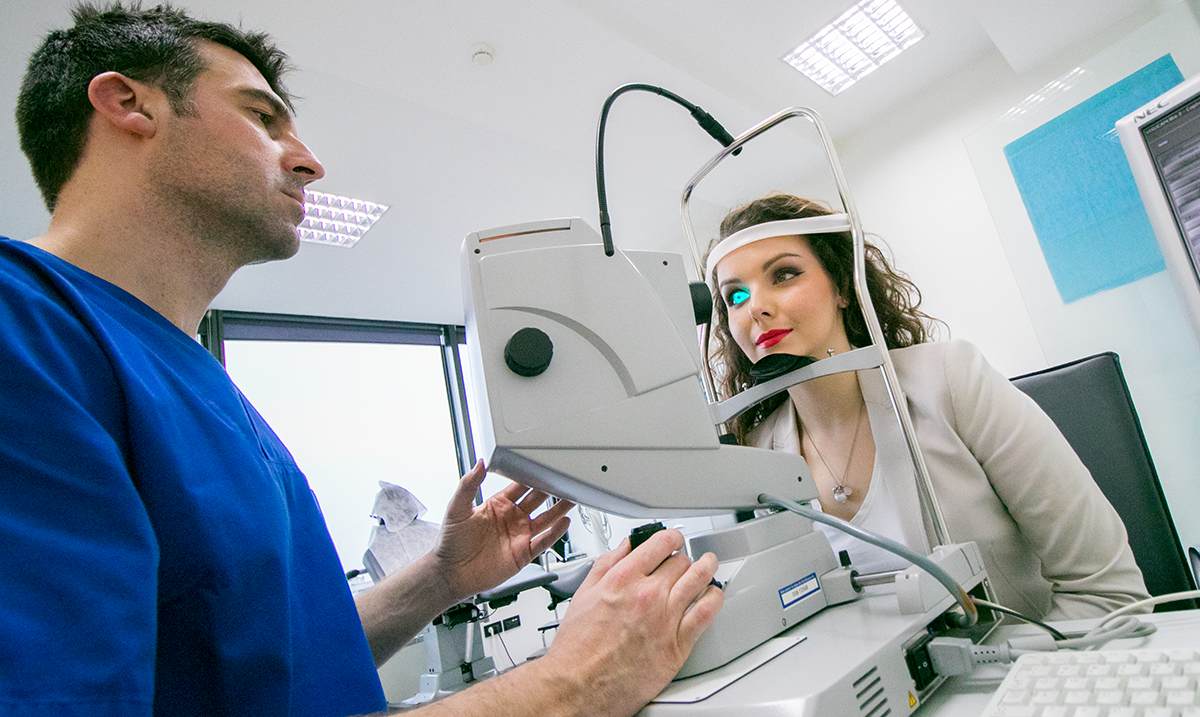
A contact lens examination includes determining your prescription and an examination of the anterior segment of the eye. The ophthalmologist will measure the curvature of your cornea with a computerised keratometer.
Once the specialist determines the type of lenses that is best for you, you will receive trial contact lenses and be properly trained in how to use them (inserting and removing lenses, lens care).
CHECK PRICES AND CURRENT SPECIAL OFFERS IN OUR PRICE LIST
A contact lens examination includes computerised refractometry, determination of visual acuity (prescription), computerised keratometry (corneal curvature), measurement of intraocular pressure, an examination of the eye structures by a specialist on a biomicroscope, as well as a consultation on the type of lenses and training in inserting, removing and caring for them.
Duration of the examination
The examination takes about 45 minutes; depending on the length of the training, the examination time may be extended.
Before the examination
If you wear contact lenses, come to the lens examination wearing your current ones and bring the case in which you keep them. First, visual acuity is checked with the contact lenses, and the position and appearance of the existing lenses on the eye are observed on the biomicroscope. During the further examination the lenses need to be removed, after which the parameters are determined and checked.
If this is your first contact lens examination, you need to bring your existing medical documentation.
After the examination
If you are receiving contact lenses for the first time after training at our clinic, you need to practise inserting and removing the lenses at home too, because this takes practice. You need to order contact lenses in your prescribed strength, as well as the lens cleaning and storage solutions used for maintenance.
Contact lenses can be classified according to different criteria:
RIGID CONTACT LENSES
Rigid contact lenses are made of PMMA (polymethyl methacrylate). This material does not allow oxygen through and is hardly used at all today.
RIGID GAS PERMEABLE CONTACT LENSES
These lenses provide very sharp vision, are durable, correct a range of vision defects and are easy to handle.
SOFT CONTACT LENSES
Today, worldwide, soft contact lenses make up about 85% of all contact lenses.
These lenses are characterised by a short adaptation period and great comfort; they do not move on the eye like RGP lenses and do not fall out.
They are made of soft (hydrogel) materials with different water content (from 25% to 79%). Since the plastic itself does not allow oxygen through, the presence of water enables oxygen to reach the eye.
The material is porous, so there is an increased possibility of eye irritation or infection due to contamination of the lens with bacteria, dust or protein deposits.
Soft contact lenses therefore require strict hygiene, and frequent lens replacement reduces the likelihood of problems and ensures eye health and comfortable lens wear.
The choice of lenses is made at the examination. It depends on the structure of your eye, your prescription, your personal needs and the opinion of the ophthalmologist with whom you consult after the examination about which solution is most suitable for you.
Items from the clinic's price list for this service. The final price depends on the findings and the doctor's assessment.
Full price list| Service | Booking | Price |
|---|---|---|
| Soft contact lens fitting | 70 €Price on 10.09.2026.: 70 € | |
| Semi-rigid contact lens fitting | 100 €Price on 10.09.2026.: 100 € | |
| Rose K contact lens fitting | 100 €Price on 10.09.2026.: 100 € |
The regular price is crossed out and the price valid today is highlighted. Next to each item, the price that applied on 10.09.2026. is also shown (Decision on displaying an additional price, NN 101/2026).
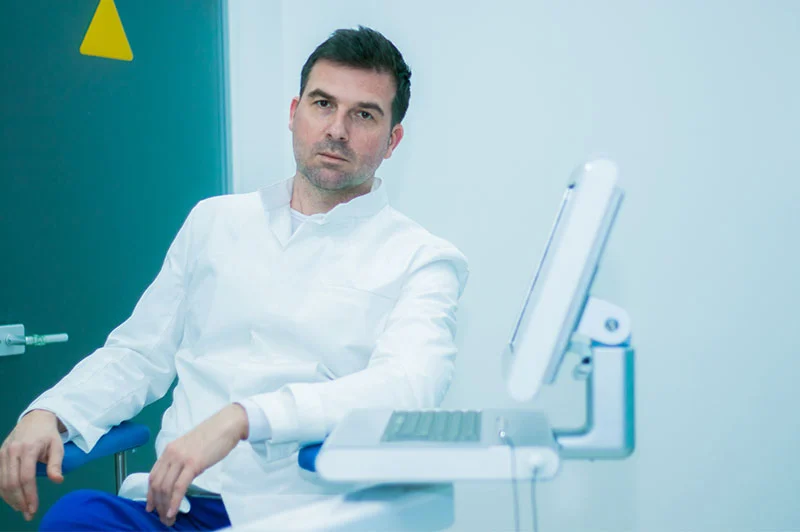
Specialist in ophthalmology, founder of Poliklinika Knezović
Expert in diseases of the anterior segment of the eye and in laser treatment of keratoconus. More than 25 years in ophthalmology, with training at leading centres around the world.
Every eye is different. The doctor decides on the method only after an examination and diagnostics. Book an appointment and you will receive a clear recommendation and an exact quote, with no obligation.