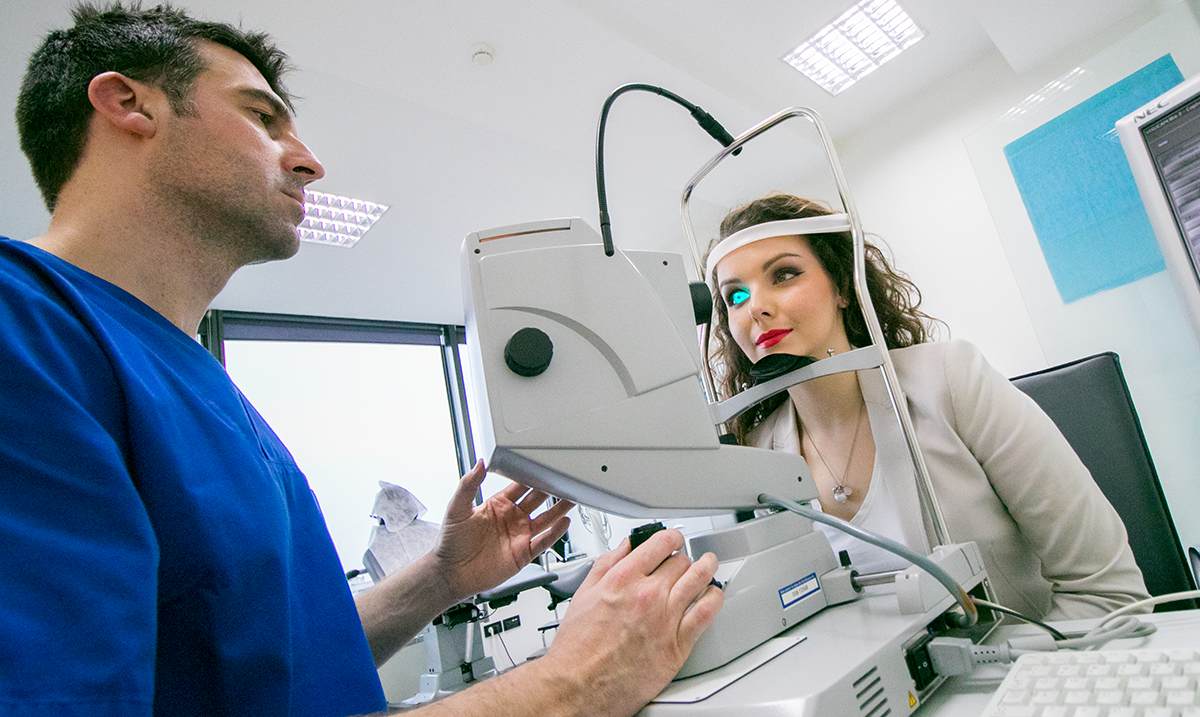
Intraocular pressure is the pressure that the fluid filling the eyeball exerts on it. Eye pressure is regulated by the production and drainage of aqueous humour, for which...
Price of the examination 20 €Price on 10.09.2026: 20 €Intraocular pressure is the pressure that the fluid filling the eyeball exerts on it. Eye pressure is regulated by the production and drainage of aqueous humour, which is the responsibility of structures in the eye such as the ciliary processes, the trabecular meshwork and other parts of the drainage system. Aqueous humour is a clear liquid solution that fills the space between the lens and the cornea. It plays a key role in delivering nutrients and other substances (amino acids, glucose, minerals, enzymes...) to the transparent eye structures that contain no blood vessels (the cornea, lens and vitreous). Another important function of aqueous humour is the regulation of intraocular pressure, which is responsible for the tone and shape of the eye.
Aqueous humour is produced by the ciliary body by filtering plasma. It is secreted into the posterior chamber, passes through the gap between the lens and the back of the iris, and flows through the pupil into the anterior chamber. There it drains through the trabecular meshwork at the limbus into Schlemm's canal and leaves the eye into the blood veins. A weaker route of drainage of aqueous humour is uveoscleral drainage, which does not depend on intraocular pressure.
Intraocular pressure (IOP) is regulated by a delicate balance between the amount of aqueous humour secreted and drained.
Reduced production of aqueous humour can lead to hypotony of the eye and disturbed metabolism of the eyeball. Increased production or poor drainage of aqueous humour can lead to raised intraocular pressure, which can lead to glaucoma and the related damage to the optic nerve. However, raised IOP is not necessarily a factor in the development of glaucoma, but it is a risk factor.
Since glaucoma is a disease that shows no symptoms in its early stage, screening in the population over forty is extremely important, because the prevalence of glaucoma is proven to rise with age.
The current price is shown in the box with the price at the top of the page. For all current prices, see the valid price list of our clinic.
Duration of the examination
Depending on the method, intraocular pressure measurement takes a few minutes.
Before the examination
No additional preparation is needed before the examination. If intraocular pressure is measured by applanation or DCT Pascal, anaesthetic drops need to be instilled before the measurement.
After the examination
After the examination, the patient receives a report with the measured intraocular pressure value.
Waiting for results
Results are ready immediately after the measurement.
Reference values
Normal intraocular pressure is around 16mmHg, and ranges from 10-21 mmHg.
Items from the clinic's price list for this service. The final price depends on the findings and the doctor's assessment.
Full price list| Service | Booking | Price |
|---|---|---|
| Follow-up eye pressure measurement | 20 €Price on 10.09.2026.: 20 € | |
| Eye pressure measurementApplanation tonometry | 20 €Price on 10.09.2026.: 20 € |
The regular price is crossed out and the price valid today is highlighted. Next to each item, the price that applied on 10.09.2026. is also shown (Decision on displaying an additional price, NN 101/2026).
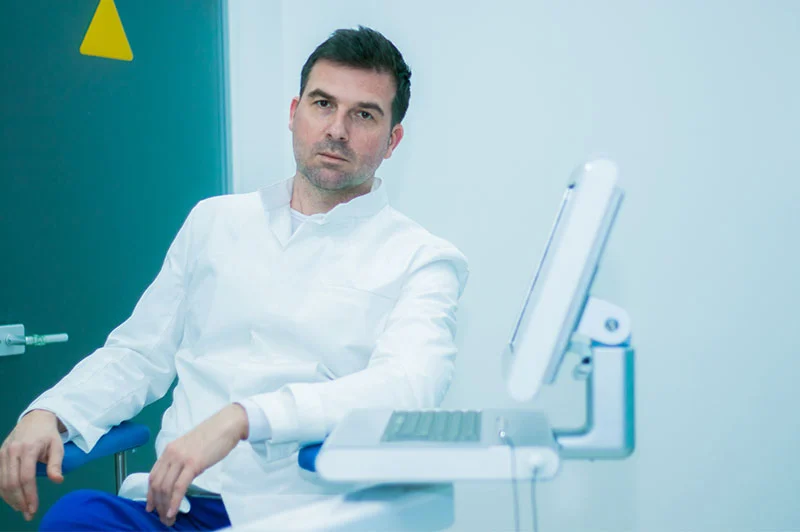
Specialist in ophthalmology, founder of Poliklinika Knezović
Expert in diseases of the anterior segment of the eye and in laser treatment of keratoconus. More than 25 years in ophthalmology, with training at leading centres around the world.
Every eye is different. The doctor decides on the method only after an examination and diagnostics. Book an appointment and you will receive a clear recommendation and an exact quote, with no obligation.