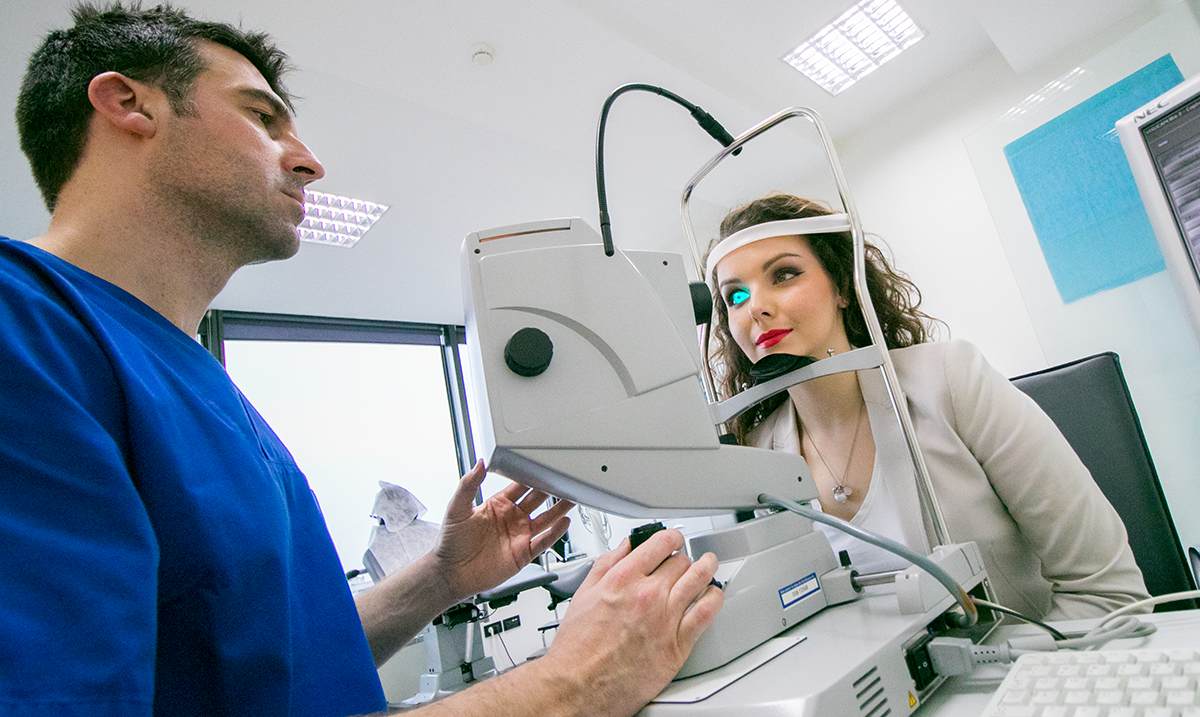
Keratoconus is a degenerative disease of the cornea whose cause is not fully known and which most often affects younger people. By the time a patient notices signs of k...
Price of the examination 150 €Price on 10.09.2026: 150 €Keratoconus is a degenerative disease of the cornea whose cause is not fully known and which most often affects younger people. By the time a patient notices signs of keratoconus, the disease has usually progressed.
In patients with keratoconus, the cornea progressively thins, weakens and becomes irregular, which leads to an increase in the prescription (short-sightedness and irregular astigmatism). Blurred vision, double vision and sensitivity to light appear.
To stop progressive keratoconus, an additional procedure is often needed to improve patients' visual acuity.
In its early stage, keratoconus is very hard to recognise without the right equipment at an eye examination (Pentacam analysis). The most common symptoms a patient can recognise themselves are double vision, increased sensitivity to light and glare. Most affected people feel the need to rub their eyes because of allergies and a feeling of dry eye, and to squint to sharpen the image, which is strictly forbidden because it can lead to progression of the disease itself. Keratoconus can also be recognised by the fact that, after some time, glasses no longer help to improve visual acuity.
The diagnosis is usually made by an ophthalmologist during a detailed eye examination. Early detection of keratoconus is difficult, but with modern devices such as Pentacam we can determine even the earliest stage with certainty.
The diagnosis is usually made by an ophthalmologist during a detailed eye examination. Early detection of keratoconus is difficult, but with modern devices such as Pentacam we can determine even the earliest stage with certainty. If there is a family history of keratoconus, or frequent changes in prescription (especially astigmatism), it is important to have corneal topography done as a preventive measure.
We are a clinic specialised in keratoconus, and the examination at our clinic is detailed and comprehensive. It is carried out in particular detail because of the Athens Protocol itself (the LATEST method of stabilising keratoconus and restoring vision).
The current price is shown in the box with the price at the top of the page. For all current prices, see the valid price list of our clinic.
Duration of the examination
The examination takes 60 minutes.
Before the examination
Before the examination, please prepare any existing medical documentation so that the progression of the disease can be compared. If you wear contact lenses, you should go without them for at least 24 hours if they are soft contact lenses, or for as many days as the number of years you have worn semi-rigid/rigid contact lenses.
After the examination
After the examination, it is necessary to consider the treatment options for keratoconus in order to halt its progression.
In most cases, after a keratoconus diagnosis (depending on the stage), patients are prescribed semi-rigid contact lenses to sharpen visual acuity so that they can function normally in everyday activities. If keratoconus is not treated in time, its further progression can lead to permanent loss of vision, and in some cases corneal transplantation remains the only treatment option. Nowadays such cases are increasingly rare thanks to advanced technology that allows keratoconus to be diagnosed at an early stage. At our clinic we successfully treat keratoconus with the latest methods in the world, cross-linking and the newest procedure, by far the best for the patient – the Athens Protocol.
Items from the clinic's price list for this service. The final price depends on the findings and the doctor's assessment.
Full price listThe regular price is crossed out and the price valid today is highlighted. Next to each item, the price that applied on 10.09.2026. is also shown (Decision on displaying an additional price, NN 101/2026).
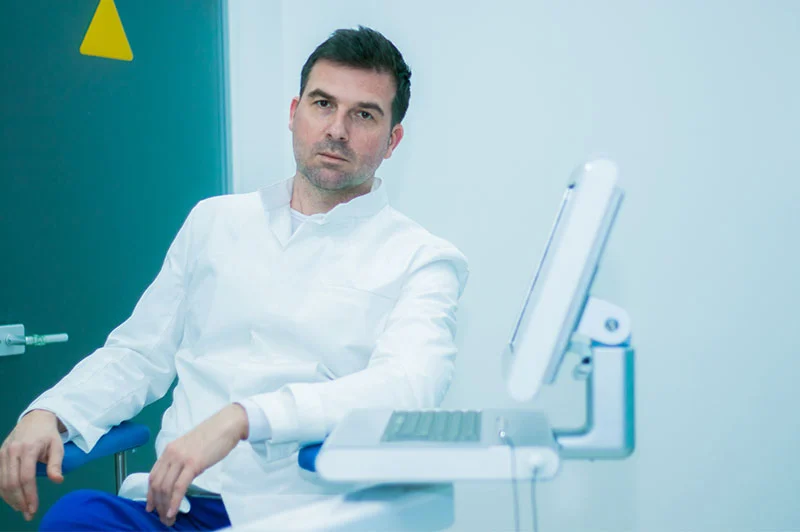
Specialist in ophthalmology, founder of Poliklinika Knezović
Expert in diseases of the anterior segment of the eye and in laser treatment of keratoconus. More than 25 years in ophthalmology, with training at leading centres around the world.
Every eye is different. The doctor decides on the method only after an examination and diagnostics. Book an appointment and you will receive a clear recommendation and an exact quote, with no obligation.